
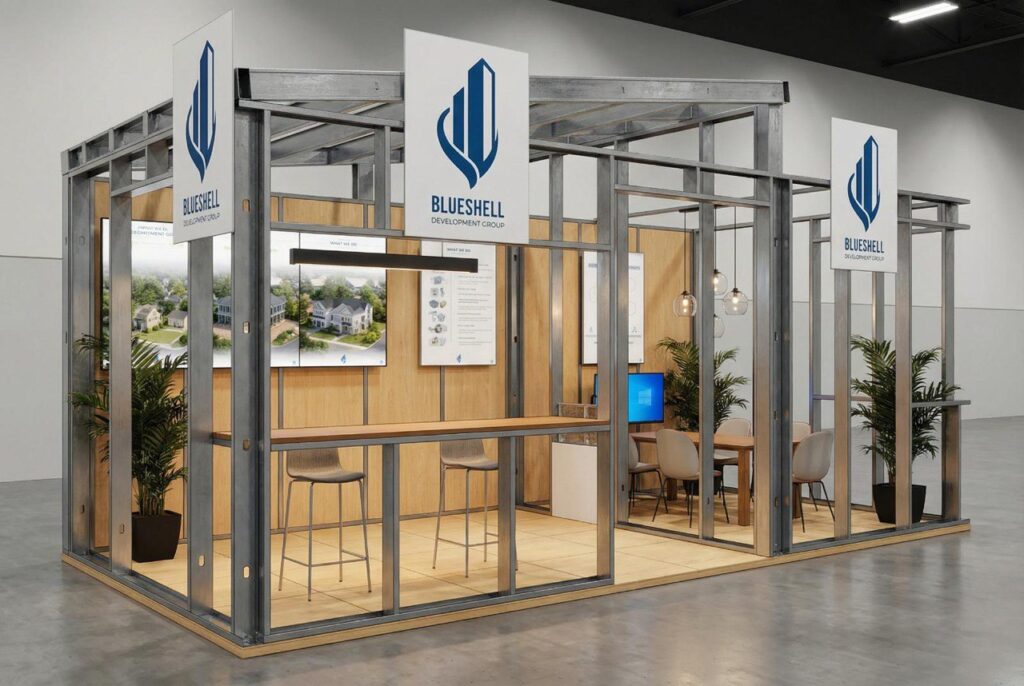
In most construction projects, design comes first and structure is forced to adapt later.
This sequence may look efficient on paper, but in reality it introduces cost risk, schedule uncertainty, and compromised performance.
At BlueShell Development Group, we take a different approach:
structure drives design — from day one.
The Problem with Design-First Thinking
Traditional delivery models separate architecture, engineering, and construction into isolated phases. Design decisions are often made without full awareness of structural logic, constructability, or execution constraints.
The result is familiar:
- Structural compromises late in the process
- Design revisions during construction
- Cost overruns and schedule delays
- Misalignment between intent and execution
In multi-unit and multiplex projects, these inefficiencies are multiplied across every unit.
Structure Is Not a Material Choice — It’s a System
Cold-Formed Steel (CFS / LSF) is often misunderstood as a simple substitute for wood framing. In reality, it is a structural system governed by engineering standards, manufacturing precision, and repeatable execution.
When structure is treated as a system:
- Tolerances are controlled
- Loads are predictable
- Connections are consistent
- Design decisions are informed early
This enables a fundamentally different design–build workflow.
When Structure Drives Design
Starting with structure changes how projects evolve.
Instead of asking “How do we make the structure fit this design?”
we ask “What design opportunities does the structure enable?”
With CFS:
- Wall thicknesses, spans, and heights are defined early
- Repetition becomes an advantage, not a constraint
- Design coordination happens before construction begins
- Cost and schedule are validated upstream
This is especially critical in multiplex developments, where consistency across units directly affects quality and profitability.
Precision Enables Predictability
CFS components are precision-manufactured, not site-assembled improvisations. This manufacturing-based approach reduces jobsite variability and allows design intent to carry through to execution.
Predictability is not about speed alone — it is about confidence:
- Confidence in alignment
- Confidence in fire performance strategies
- Confidence in long-term durability
- Confidence in delivery
Design–Build Only Works When the System Comes First
Design–build is often marketed as a faster alternative to traditional delivery. But without a unified structural system, design–build simply compresses risk rather than removing it.
At BlueShell, design–build operates under a single accountable system:
- Structure informs design
- Design aligns with construction
- Construction reflects engineered intent
This is how risk is reduced — not managed after the fact.
A Better Starting Point
When structure leads, projects benefit from:
- Reduced rework
- Cleaner execution
- Tighter cost control
- More reliable schedules
- Better-performing buildings over time
Structure-first thinking is not restrictive.
It is enabling.
Closing Thought
Buildings perform the way they are structured.
When structure drives design, performance becomes intentional — not accidental.
If you are exploring a multiplex or multi-unit project and want to understand how structural systems influence feasibility, cost, and delivery, we’re happy to discuss your site and objectives.
Optional metadata (SEO-ready)
Title: Why Structure Should Drive Design — Not the Other Way Around
Category: News
Excerpt: Most construction projects treat structure as an afterthought. In reality, structure-first thinking enables predictability, precision, and better design–build outcomes.